Root Canal Treatment vs. Dental Implants : Key Differences You Should Know!
Health News
07 Jul 2026
views
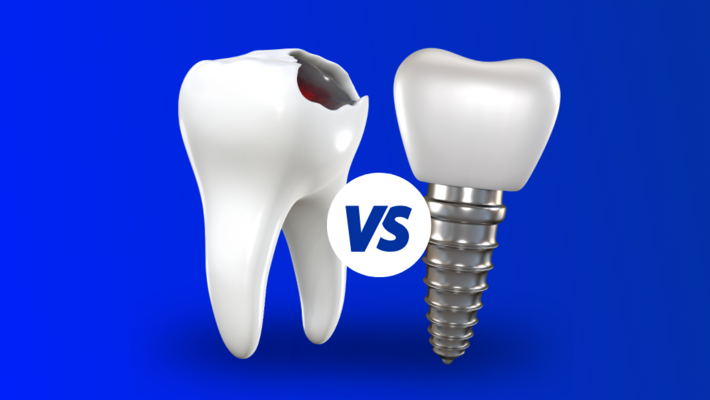
Root Canal Treatment vs. Dental Implants : Key Differences You Should Know!
When facing severe problems like Deep Cavities, major tooth fractures, or nerve canal inflammation, dentists typically present two primary pathways: "Root Canal Treatment" to save your natural tooth, or "Tooth Extraction followed by a Dental Implant."
Many patients struggle to decide which option offers the best value and suitability for their oral health. Let's dive into the core differences, pros and cons, and decision criteria in an easy-to-understand breakdown to help you make the right choice.
Understanding the Basics
- Root Canal Treatment : The dentist removes the decayed tooth structure, cleans out the infected or inflamed nerve tissue inside the pulp chamber, sterilizes the canal, and seals it. In most cases, a dental crown is placed over the tooth to restore its strength.
Pros : Shorter overall treatment time, more budget-friendly, and provides a 100% natural chewing sensation because the original periodontal ligaments and surrounding nerves remain completely intact. - Dental Implant : When a tooth is too severely damaged to be saved and must be extracted, a biocompatible titanium post is surgically placed into the jawbone to act as a permanent artificial root. Once healed, a custom dental crown is attached on top.
Cons/Pros : Requires a longer healing window (about 3–6 months for the implant to fuse with the bone) and carries a higher upfront cost due to the surgical grade materials, but offers a permanent, standalone replacement.
Choose "Root Canal Treatment" if :
- Most of the original tooth structure is still intact, and the root remains strong without any vertical cracks extending beneath the gumline.
- Your primary goal is to keep your natural tooth as long as possible (nothing functions quite as perfectly as your own natural tooth).
- You have time constraints and need the tooth functional quickly, or you want a more cost-effective option.
- The tooth is completely broken down or fractured below the gumline, leaving insufficient structure to support a dental crown.
- The root has a vertical fracture beneath the gums, making extraction the only viable medical option.
- You need a permanent replacement for a missing tooth but want to avoid shaving down adjacent teeth (like a traditional bridge) or wearing a removable partial denture.

Follow Our Social Network
 |  |  |  |  |  |